
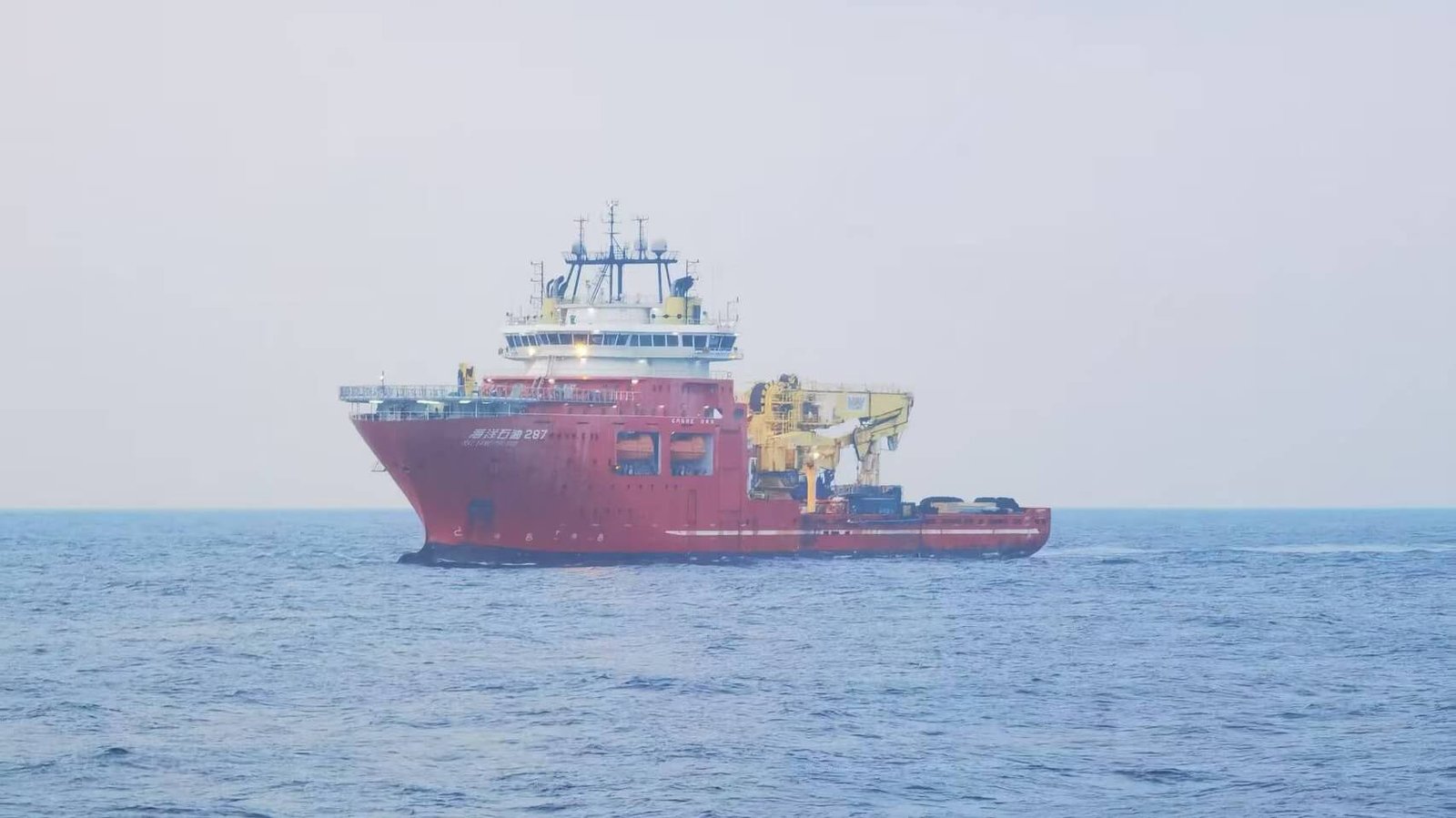
Shell’s Vito deep-water project offers a rare look into one of the most technically demanding operations in offshore energy — subsea pipeline installation. From a massive pipe fabrication facility in Texas to the depths of the Gulf of Mexico, a team of engineers, welders, and ROV specialists work together to build the infrastructure that carries oil and gas from the seabed to the surface.
What Is Subsea Pipeline
When an offshore platform like Shell’s Vito is built, it doesn’t operate in isolation. It relies on a network of flowlines — heavy steel pipes that run along the ocean floor — to transport oil and gas from the wellheads up to the platform.
Installing these flowlines in nearly a mile of deep water is a monumental engineering challenge, handled by specialized subsea contractors like Subsea7.
Subsea Pipelines: Built for Extreme Conditions
The flowlines destined for the Vito project are among the heaviest ever fabricated for the Gulf of Mexico. Each pipe has a wall thickness of 1.75 inches, giving it a weight of 1.3 million pounds per mile — roughly twice the weight of the Statue of Liberty.
That extreme weight and thickness serve a critical purpose. The pipe must be able to handle approximately 14,000 psi, which is the pressure that comes directly out of the reservoir.
The pipes are also thermally insulated, because the oil coming out of the ground is around 265°F. Maintaining that temperature is essential: if the oil cools, it begins to thicken — much like honey — and can no longer flow efficiently through the line.
Each flowline runs approximately four miles in length, and three separate flowlines will carry the oil and gas from the seabed up to the Vito platform.
Subsea Pipelines Fabrication
The pipe fabrication takes place at Ingleside Spoolbase in Texas, operated by Subsea7. The facility’s building stretches 1,180 feet in length and contains 24 workstations. All operations are carried out indoors to maintain quality, efficiency, and safety.
Pipes arrive at the facility in 40-foot sections and are progressively welded together end to end as they travel through the building. Each joint undergoes 14 separate weld passes to achieve maximum strength.
Every weld is then inspected ultrasonically to identify and eliminate any defects. Finally, each joint is sealed in a protective waterproof collar before moving on.
The welding itself is performed by automated machines — often called “bugs” — that circle the pipe and lay down each weld pass with precision and consistency, eliminating human error. Each individual weld costs approximately $12,000, underscoring the importance of getting it right the first time.
Pipe-Spooling Vessel
Once the four-mile pipe sections are fully welded and inspected, they must be loaded aboard the Seven Oceans, a specialized pipe-spooling vessel. The pipe is bent and wound onto a massive reel on the ship’s deck — much like a garden hose, but on an industrial scale.
Bending steel pipe of this size and wall thickness requires 50 tons of force. The process is carefully engineered: extensive testing was carried out beforehand, including bending welded sections to the same radius as the ship’s reel and then dissecting and mechanically testing the welds to confirm their integrity.
The pipe is designed to return to its original straight shape once the bending force is released. Over-bending, however, would cause permanent plastic deformation, making the pipe unusable. The pipe is packed onto the reel in neat, even layers — a step that is critical to ensuring the pipe can be unspooled offshore without damage.
Subsea Pipeline Laying Process
With the Seven Oceans positioned approximately 150 miles offshore above the Vito wellheads, the pipe-laying operation begins.
Working in 4,000 feet of water — well beyond the reach of human divers — the team relies on remotely operated vehicles (ROVs) to carry out the subsea work.
The ROVs used on this operation are large, sophisticated machines capable of diving to depths of up to a mile and a half. Each ROV is equipped with powerful thrusters — four lateral and four vertical — allowing it to maneuver like a small aircraft underwater.
Onboard lighting illuminates the completely dark environment at depth. A seven-function robotic manipulator arm, known as a Titan T4, mimics the movements of a human arm and is used to handle equipment and make connections on the seabed.
Each ROV system is operated by a crew of three, with two systems running simultaneously, for a total of six personnel per shift.
The ROV’s first task is to connect the pipe to a pre-installed anchor on the seabed. From there, pipe-laying proceeds continuously around the clock — a painstaking process that takes ten days to complete. Throughout the operation, the ROVs act as the eyes for engineers on the bridge, monitoring the pipe’s position in real time.
Setting the correct angle at which the pipe leaves the ship is critical. This is controlled by raising or lowering the vessel’s rear tower. If the angle is too steep, the pipe can buckle as it contacts the seabed. If the angle is too shallow, the 300 tons of pipe hanging off the back of the vessel makes the ship unstable and accurate positioning becomes impossible.
Despite these challenges, the Subsea7 team is capable of laying the pipe to within 12 inches of a target on the seabed nearly a mile below — a remarkable demonstration of precision engineering in one of the world’s most demanding environments.