
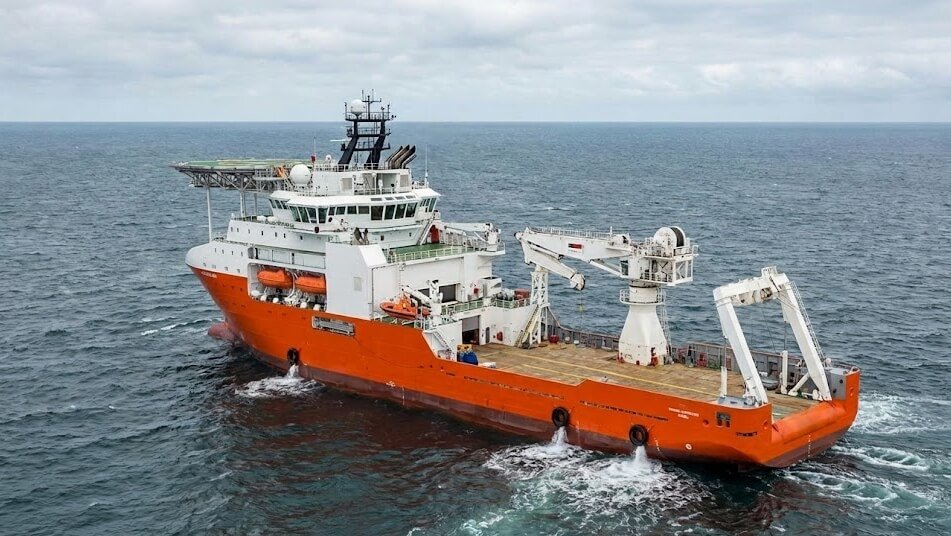
What is a dynamic positioning vessel? What is dp vessel used for? These advanced vessels play a crucial role in modern offshore operations, maintaining precise positioning without anchors in challenging marine environments.
DP Dynamic Positioning
Dynamic Positioning, or DP, is a system which keeps a vessel automatically in position with the help of active thrust. The system utilizes thrusters, rudders, and propellers to withstand external forces like wind, waves, and current.
Dynamic positioning was first used in the 1960s and has since then been improved and modified to better suit the emerging offshore and oil industry. The system is today used on rigs designed for drilling, production vessels, diving and ROV vessels, pipe-laying vessels, in addition to standby and supply vessels.
Platform Supply Vessels in Offshore Operations
One of the most important vessels in the offshore industry is the platform supply vessel. A platform supply vessel, or PSV, supplies the rig with everything it needs to perform its task. Rigs need everything from provisions for their crew, water, fuel, and crucial equipment to drill or produce oil or gas.
Viking Avant supplies drilling platforms in the North Sea. Before the platform supply vessel leaves the harbor, there are many issues which need to be resolved. The vessel is loaded by base personnel and supervised by the crew of Viking Avant, whose job is to make sure that the cargo arrives safely to the offshore installation.
How does Dynamic Positioning work
DP2 Vessel Technology
To aid the crew, the platform supply vessel is equipped with the latest in advanced technology. Viking Avant is a DP2 vessel, which means it has safeguards in place to withstand a single fault in the technical system without the vessel losing its position.
A typical DP2 vessel has the following equipment: DP operator stations, position reference systems, gyro compasses, vertical reference sensors, wind sensors, UPS, technical redundancy on thrusters and propellers, and technical redundancy on the power supply.
Preparing for DP Operations
Before Viking Avant arrives at the installation, all the equipment must be checked through procedures and checklists. The crew prepares for the operation. When all equipment is checked and controlled, the vessel asks for permission to enter the 500-meter safety zone.
Setting the vessel up on DP is a critical part of the operation. The DP system contains a mathematical model of the vessel which is continuously updated while being operated. The wind forces are measured by two wind sensors, but other external forces like current and waves have to be calculated by the DP computers. Due to this calculation, the vessel needs some time to become stable.
DP System in Action
When the vessel and the DP is stable, the vessel will move to the final loading position by using the DP. The DP system has many functions and modes, but the most common mode is to keep a vessel in the same position.
The DP operator can change the position or heading effectively by using the desk facilities on the operator station.
When the vessel has reached its position, the loading and offloading can start. This is a very high-risk environment, and the precise and accurate cooperation between the AB, crane operator, and bridge personnel is essential.
The situation is never the same, and there’s always a risk involved. Though the DP system takes control of the positioning of the vessel, the DP operator must always be ready to act.
After loading and unloading, the vessel will exit the 500-meter safety zone and proceed to its next location.
Becoming a Certified DP Operator
To become a certified DP operator, you must complete the basic and advanced DP course from a certified DP center approved by the Nautical Institute. In addition, you must have a minimum of 210 days of experience onboard a certified dynamic positioning vessel. After completing courses and the minimum DP experience, you can apply for a DP operator certificate.
I hope this article about what a dynamic positioning vessel is may help you.